
Third Circuit Strikes Down New Jersey’s Assault Firearm and Magazine Bans
Last updated: July 28, 2026. This is a developing matter. The Third Circuit’s decision has not yet taken effect and the New Jersey Attorney General’s Office has not released final guidance.
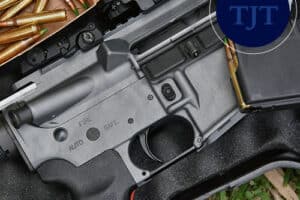
Association of New Jersey Rifle & Pistol Clubs v. Attorney General of New Jersey (previously captioned ANJRPC v. Platkin and Cheeseman v. Platkin) consolidated three lawsuits challenging New Jersey’s assault firearm and magazine restrictions. The Court determined that magazines holding more than 10 rounds are protected “arms” under the Second Amendment and that New Jersey had not established a historical basis for banning them.
The decision is especially significant because it marks the first time a federal court of appeals has struck down a state assault weapons ban. It also creates a direct conflict with other federal appellate courts that have upheld similar restrictions, increasing the likelihood of further review by the U.S. Supreme Court.
Importantly, the ruling did not make previously prohibited firearms and magazines immediately legal to buy or possess. The decision must still work through additional court procedures, and the state may seek further review.
What the Ruling Does Not Change Right Now
New Jersey’s restrictions on the sale, purchase, possession, and transportation of previously banned firearms and magazines remain in force. The Court held the restrictions unconstitutional, but the case is not over, and the opinion is not a license to disregard laws that remain on the books.
The Third Circuit held that New Jersey could not constitutionally ban the semiautomatic rifles swept into the state’s assault firearm definition, or magazines holding more than 10 rounds. The Court remanded part of the consolidated case to the federal district court for further proceedings on how the statute applies to other covered firearms, including certain semiautomatic pistols and shotguns.
The practical point is simple: no one in New Jersey should assume a previously banned rifle or magazine is automatically safe to buy, possess, or transport. That assumption can still result in serious weapons charges. This article describes the current status of the litigation. It is not individualized advice about any particular firearm, magazine, or set of circumstances.
When Does the Third Circuit’s Decision Take Effect?
Timing has been a source of confusion. The New Jersey State Police Firearms Dealer Investigation Unit initially notified licensed dealers that the decision would be effective July 31, 2026. The Attorney General’s Office later clarified that July 31, 2026 is the deadline for the state to petition for rehearing, and that the decision becomes effective seven days after that date under Federal Rules of Appellate Procedure 40 and 41.
The Attorney General’s Office has said it is developing guidance for law enforcement, licensed dealers, and the public. Until that guidance issues and the mandate actually takes effect, the safest course is to treat the existing restrictions as enforceable.
The state may also seek a stay from the Third Circuit or the U.S. Supreme Court. A stay would pause the effect of the ruling while the state pursues further appellate review.
What New Jersey’s Assault Firearm and Magazine Laws Prohibit
New Jersey’s assault firearm restrictions date back to 1990 and reach far beyond any single rifle. N.J.S.A. 2C:39-1 identifies more than 50 firearms by name or type, and the definition also covers firearms sold under different names if they are “substantially identical” to a listed weapon.
The statute contains several additional categories, including semiautomatic rifles with fixed magazines capable of holding more than 15 rounds and firearms bearing certain combinations of prohibited features. Under the Attorney General’s “substantially identical” guidelines, a semiautomatic rifle that accepts a detachable magazine may fall within the ban if it has at least two listed features, such as a folding or telescoping stock, a conspicuously protruding pistol grip, a bayonet mount, a flash suppressor, a threaded barrel, or a grenade launcher.
N.J.S.A. 2C:39-5(f) generally makes knowing possession of an assault firearm a second degree crime absent a statutory exception such as lawful licensing, registration, or permanent inoperability. A second degree weapons conviction can carry five to ten years in New Jersey State Prison and fines up to $150,000, and these offenses fall under the Graves Act, which imposes mandatory minimum sentencing.
New Jersey separately prohibits large capacity ammunition magazines under N.J.S.A. 2C:39-3. The law defines a large capacity magazine as a box, drum, tube, or similar container capable of feeding more than 10 rounds continuously and directly into a semiautomatic firearm. Possession is generally a fourth degree crime with limited statutory exceptions, and a conviction can bring up to 18 months in prison and fines up to $10,000. You can review the broader penalties for gun charges in New Jersey for additional context.
The magazine limit itself has shifted over time. New Jersey initially permitted magazines holding up to 15 rounds. A law enacted in 2018 lowered the general limit to 10 rounds, with the principal compliance deadline arriving in December 2018. A separate July 2019 deadline applied to a narrower registration provision involving certain qualifying firearms.
What the Third Circuit Held Under the Bruen Framework
The Third Circuit applied the constitutional framework established by the U.S. Supreme Court in New York State Rifle & Pistol Association v. Bruen. Under that framework, a court first asks whether the Second Amendment’s text covers the conduct at issue. If it does, the government must show the restriction is consistent with the nation’s historical tradition of firearm regulation.
Courts may not uphold a firearm law simply by concluding that its public safety benefits outweigh the burden on constitutional rights. Supreme Court precedent also distinguishes weapons that are “dangerous and unusual” from arms in common use for lawful purposes, and the Third Circuit weighed common use in its historical analysis.
Judge Arianna Freeman, writing for the majority, found that the semiautomatic rifles and magazines covered by New Jersey’s laws are protected arms. The record showed that millions of Americans lawfully own semiautomatic rifles for self-defense, target shooting, hunting, and pest control. The Court also noted that magazines holding more than 10 rounds are widely owned and commonly supplied with popular semiautomatic firearms.
Because these rifles and magazines are in common use, New Jersey had to demonstrate that its bans were supported by a comparable historical tradition. The majority found the state had not met that burden. Historical laws regulating gunpowder storage were aimed primarily at preventing fires and explosions, while laws addressing trap guns or concealed carry of certain weapons operated very differently from a broad prohibition on possessing an entire class of firearms or magazines.
The Court emphasized that the government need not identify a historical law identical to a modern restriction, but it must still produce an adequate historical analog that is relevantly similar in both how and why it burdens the right. The majority concluded that New Jersey’s examples were too different, too narrow, or too far removed from the founding era to justify the modern bans.
The ruling was sharply divided. Ten judges joined the result and five dissented, with multiple concurring and dissenting opinions addressing how the Bruen framework and the common use standard should apply. The case was originally argued before a three-judge panel in July 2025. Before that panel issued a decision, the Third Circuit elected to rehear the consolidated appeals en banc, and the full Court heard a new round of arguments in October 2025.
What Happens Next: Rehearing, the Circuit Split, and the Supreme Court
The Third Circuit’s decision deepens an existing split among the federal appellate courts over whether states may ban semiautomatic rifles and large capacity magazines. Just eight days earlier, on July 9, 2026, the Seventh Circuit decided Barnett v. Raoul and upheld Illinois’ assault weapons law in a 2-1 decision, reasoning that the restrictions were consistent with a historical tradition of regulating particularly dangerous weapons. Other circuits have reached similar conclusions in cases involving Massachusetts, Maryland, and Connecticut. The Third Circuit reached the opposite conclusion under the same Supreme Court precedents.
The U.S. Supreme Court has already agreed to hear consolidated challenges to assault weapons bans in Illinois and Connecticut, with arguments expected in the 2026-2027 term. In those cases, the justices may have to decide whether rifles like the AR-15 are protected arms and what evidence a state must produce to justify a modern assault weapons ban. A decision there could set a national standard governing New Jersey and every other state with a similar law.
In the meantime, several tracks are moving at once. New Jersey may petition for rehearing, seek a stay of the mandate, or file a petition for review in the Supreme Court. Proceedings will also continue in the federal district court, which the Third Circuit directed to address how New Jersey’s assault firearm restrictions apply to other categories of firearms, including certain semiautomatic pistols and shotguns. The appellate ruling resolved the questions surrounding semiautomatic rifles and magazines over 10 rounds, but it did not resolve every issue in the consolidated cases.
The legal status of New Jersey’s restrictions may change again as rehearing petitions, stay requests, district court proceedings, and the separate Supreme Court cases move forward. This remains a developing situation, and the difference between what the Court held and when that holding takes practical effect is critical.
What This Means If You Are Facing Assault Firearm or Magazine Charges in NJ
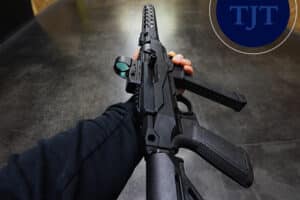
Depending on the facts, these developments may create new arguments worth evaluating. A defense attorney may need to examine the specific firearm or magazine involved, the charge filed, the procedural posture of the case, and whether the Third Circuit’s reasoning affects a suppression motion, a plea negotiation, or another element of your defense strategy. The timing of any stay, rehearing petition, or district court ruling may also matter. Our team has previously secured admission into the PTI program for a client originally charged with an assault weapon offense. Prior results do not guarantee a similar outcome. Every case depends on its own facts and circumstances.
Because the law remains unsettled and may change again, defendants should not rely on headlines or general summaries when making decisions about a pending case. For background on how these issues developed, you can also review our earlier coverage of the district court’s AR-15 ruling.
New Jersey Assault Weapons Ruling: Frequently Asked Questions
Are AR-15s legal in New Jersey now?
Not yet. The Third Circuit held that New Jersey’s ban on semiautomatic rifles is unconstitutional, but the decision has not yet taken practical effect, and the state may seek rehearing or a stay. Until the mandate issues and official guidance is released, possessing an AR-15 in New Jersey can still result in a second degree charge.
Can I buy a magazine that holds more than 10 rounds in New Jersey after this ruling?
Not currently. The Court held the 10-round limit unconstitutional, but the restriction remains enforceable until the ruling takes effect. The New Jersey Attorney General’s Office has said it is preparing guidance for dealers and residents. Purchasing or possessing a large capacity magazine before that point can still support a fourth degree charge.
What did the Third Circuit actually decide in the ANJRPC case?
Sitting en banc, the Court ruled 10-5 that New Jersey’s assault firearm provisions are unconstitutional as applied to the full class of covered semiautomatic rifles, and that the ban on magazines holding more than 10 rounds also violates the Second Amendment. The Court sent remaining questions, including how the law applies to certain semiautomatic pistols and shotguns, back to the district court.
I’m facing an assault weapons or high capacity magazine charge. Does this ruling help my case?
It may. The ruling changes the constitutional framework courts will apply to these charges, and depending on the facts it may support a motion or affect plea negotiations. It does not automatically dismiss pending charges. An attorney should review the specific firearm, the charge, and the procedural posture of your case.
Speak With a New Jersey Assault Firearms Defense Lawyer
The Tormey Law Firm’s firearms defense team handles assault firearm and high capacity magazine charges throughout New Jersey, including Bergen, Essex, Morris, Hudson, Middlesex, and Passaic Counties. We can review your charges, explain where the law currently stands, and assess whether the Third Circuit’s ruling supports an argument in your case. Call (201) 614-2474 or contact us online to schedule a free consultation.